Discipline or Creativity: What Should You Prioritise?
posted on Jun 03, 2026
Gurukul The School, ranked among the top 5 CBSE schools in Ghaziabad, have created this blog post to help parents and students understand what discipline and creativity exactly mean in a child’s life.
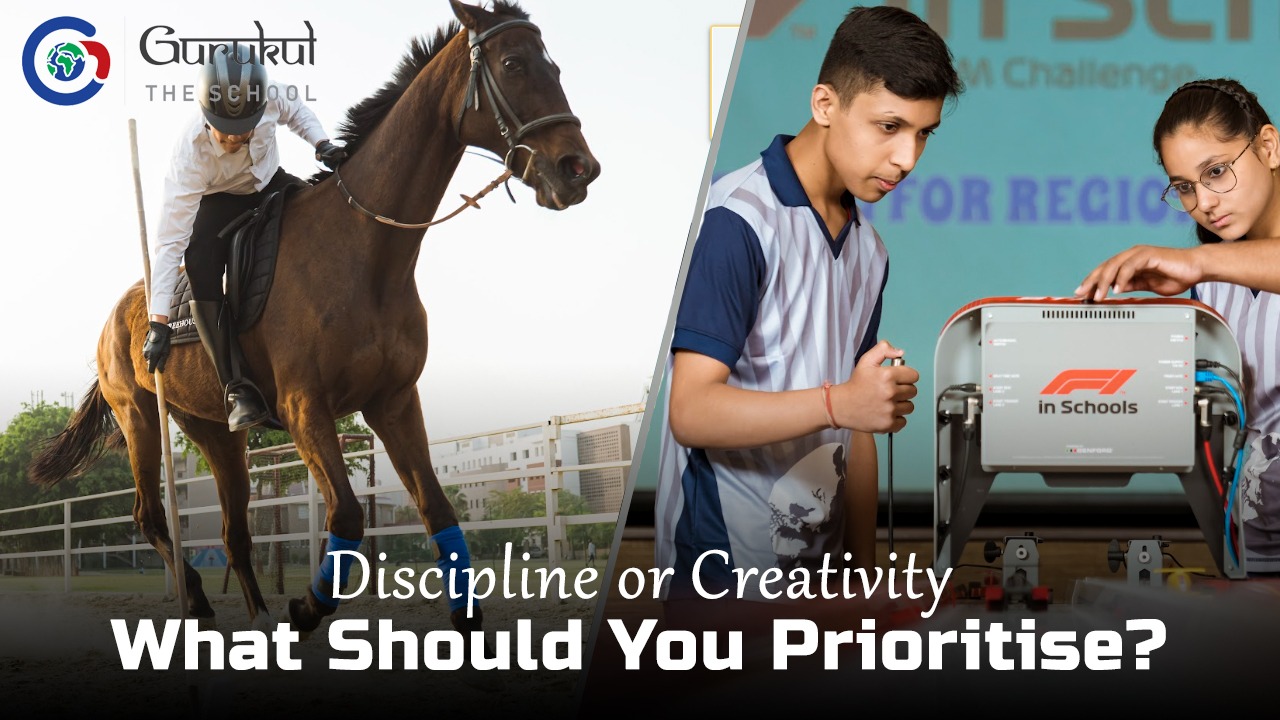
If you enter any classroom, you’ll most likely find two types of students. The first category is usually full of ideas. They’re creative and enjoy asking unusual questions, experimenting with different approaches, and thinking beyond what is taught in class.
The second category belongs to disciplined students who follow routines, stay organised, and complete tasks on time. As a parent, it’s only natural to get confused about whether your child should be a disciplined one or a creative one.
Although there’s no straight answer, you can view it through a different lens for clarity. We at Gurukul The School, ranked among the top 5 CBSE schools in Ghaziabad, have created this blog post to help parents and students understand what discipline and creativity exactly mean in a child’s life. This will help you decide which one is better for you.
What Does Creativity Actually Mean for Children?
Before you start choosing a side, we’d like to clarify what creativity exactly means for children, because some limit it to purely artistic activities, such as painting and writing stories.
So, well, according to us at Gurukul The School, creativity is simply the ability to think differently so that you can approach situations in new ways. Creativity shows up differently in different children. For some, creativity may be about asking thoughtful questions, while for others, it might be about finding unique ways to solve a math problem.
Regardless of how it shows up, we believe everyone should be creative to some extent. It will ensure you don’t memorise facts, but engage with concepts and discover possibilities.
What Does Discipline Actually Mean for Students?
Having a clear understanding of creativity isn’t enough. You must also understand what discipline means for students. Few misunderstand discipline as strict rules, pressure, or the constant need to force themselves to study.
However, it’s much simpler. At Gurukul The School, we view discipline as the ability to stay committed and take action even when motivation is low.
If you’re a student, discipline is about following a dedicated study schedule, completing assignments on time, and managing distractions while studying. Every student must have discipline as it creates consistency, which usually leads to larger results over time.
What Happens When Children Have Creativity Without Discipline?
Let’s assume you’re a creative student who always comes up with brilliant ideas for class projects. You enjoy brainstorming and thinking differently from everyone else. However, if you’re only creative but lack discipline, then even if teachers or peers are impressed by your idea, you’ll end up postponing work and struggle to follow through.
As deadlines approach, many of your projects may remain unfinished. You can also start rushing through your preparations. As a result, even your best ideas start to fail.
This situation clearly highlights that creativity can generate exciting possibilities, but possibilities alone don’t guarantee results. Without discipline, your creative ideas will remain mere ideas.
What Happens When Children Have Discipline Without Creativity?
If you consider yourself highly disciplined and follow a strict routine, this point is for you. Thanks to discipline, you may study regularly, finish assignments on time, and even follow all the given instructions. While these are extremely valuable habits, problems will arise if learning becomes entirely mechanical.
Purely disciplined students with little to no creativity often become overly dependent on memorisation and familiar patterns. When faced with unfamiliar questions or situations that demand original thinking, they may struggle to adapt.
The world outside classrooms requires more than repetition. While discipline can help you build a reliable structure, you’ll still need creativity to become flexible and develop fresh thinking.
So, What Should You Prioritise: Discipline or Creativity?
By now, you must have clearly understood that you don’t need to choose one. In fact, both skills require each other to coexist to succeed in life. However, if you’re still confused, we at Gurukul The School, one of the top 5 CBSE schools in Ghaziabad, would like to suggest focusing on discipline first, as it will help you build a strong foundation.
You can use discipline to gradually improve almost any skill over time, and it includes creativity. With discipline, you can create an environment where learning, improvement, and experimentation can happen regularly. At the same time, discipline shouldn’t remove curiosity and independent thinking from your daily learning experiences.
The strongest students aren’t the ones who simply work the hardest or think the most differently. They’re the ones who can combine both qualities effectively. Creativity will give your ideas a starting point, while discipline will take them to the finish line. Hence, maintain a good balance between both.
Frequently Asked Questions (FAQs)
Not true, a child can become both.
Many children struggle with discipline because they face constant distractions and frequently changing motivation levels.
No, every student should be creative. It’s a key skill that will help every student become an out-of-the-box thinker and problem solver.
For examinations, we’d say discipline matters more than creativity because you need consistent study habits to perform well.